
Russian Words That Change Meaning With Stress
Russian homographs: words that change meaning with stress. зАмок vs замОк, мУка vs мукА. Essential for pronunciation and meaning.
BeFluent Team
18 Jan 2026 · ~6 min read
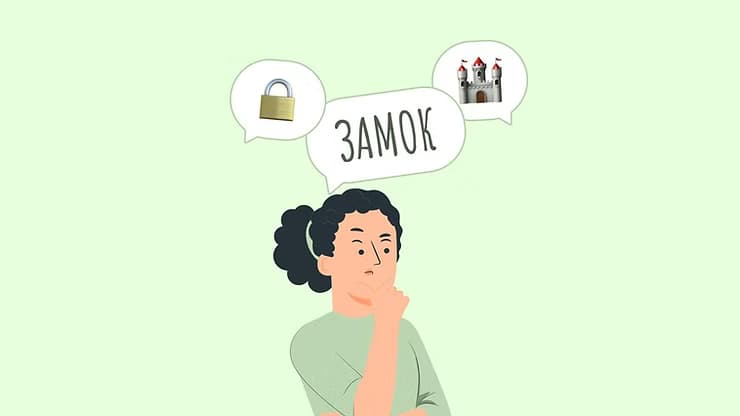
Russian has a special group of words—homographs—that are written the same way but change their meaning depending on where the stress falls. For learners, this can be surprising, because in many languages stress affects pronunciation but does not change the meaning of a word. When you learn Russian and progress in your Russian language learning, understanding stress becomes crucial for proper communication. Learning how to pronounce Russian correctly is essential, and stress placement is a key part of Russian pronunciation. This is especially important when learning essential Russian keywords, as stress can completely change their meaning.
In Russian, however, stress is an essential part of the word. A misplaced stress can completely change what you are saying.
This guide explains why this happens and gives a clear, useful list of Russian words whose meanings depend on stress — with English translations for clarity.
How to Pronounce Russian: Why is stress so important?
When learning how to pronounce Russian, understanding stress is fundamental. Stress in Russian is not just about emphasis—it can completely change word meaning, which is why proper pronunciation is crucial for communication.
Why is stress so important in Russian?
- Stress is mobile. It can fall on any syllable.
- Different meanings developed different stress patterns over time.
- Native speakers hear the difference instantly, while learners often don't.
Words where stress completely changes the meaning
These are true homographs. Every learner should know them.
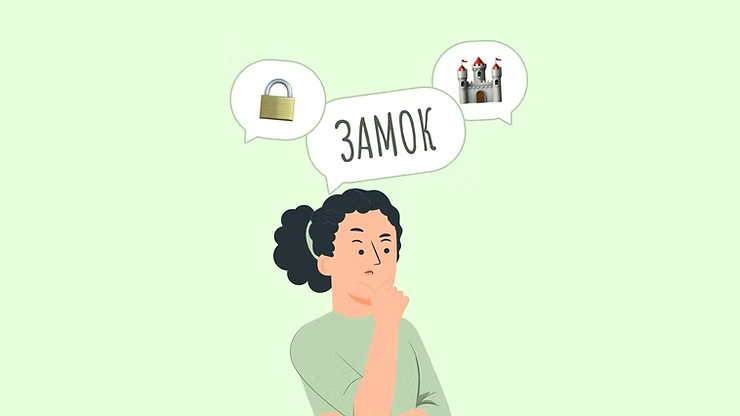
зА́мок — castle
замО́к — lock
Two completely unrelated meanings.
мУ́ка — suffering, torment
мукА́ — flour
A very important pair — identical spelling, totally different meanings.
пИ́сать — to pee
писА́ть — to write
One of the most common mistakes among beginners. Stress changes the action entirely!
А́тлас — atlas (book of maps)
атлА́с — satin fabric
Same spelling, different semantic fields: geography vs. textiles.
тО́рты — cakes (correct stress)
тортЫ́ — cakes (non-standard speech)
Here the meaning does not change, but the stress distinguishes correct literary speech from a colloquial mistake.
Words where stress changes the grammatical form
The root meaning stays related, but stress determines the grammar.
зА́мки — locks (plural of замОк)
замкИ́ — they locked / they closed (verb form)
Same spelling, but a noun vs. a verb form.
зА́писи — records, notes (plural noun)
записИ́ — they wrote down (verb form)
Again: noun vs. verb.
Why these words are difficult for learners
- In English and many other languages, stress rarely changes meaning.
- Russian stress has no universal rule.
- Learners often memorize spelling but not stress.
- Misplacing the stress can create misunderstanding.
How to learn stress-dependent words effectively
1. Study them in pairs
Contrast helps memory:
- зА́мок — замО́к
- мУ́ка — мукА́
- А́тлас — атлА́с
2. Practice in short sentences
«Король живёт в зА́мке.» — The king lives in a castle.
«Нам нужен новый замО́к.» — We need a new lock.
3. Use associations
- мУ́ка (suffering) → unpleasant feeling
- мукА́ (flour) → kitchen, baking
4. Listen to native speakers
Stress is absorbed best through hearing.
Conclusion
Words whose meanings depend on stress are one of the most characteristic features of Russian. They may seem challenging at first, but once students learn them, they gain a sharper ear for the language and speak more confidently.
Mastering these pairs is a small step that makes a big difference in understanding real Russian speech.
Want to master Russian pronunciation? Learn with BeFluent! Click the banner below:
FAQ
Structured lessons, daily practice and a built-in dictionary — free to start.
Start learning free


Practise this in a real conversation
Lessons turn what you just read into conversations you can actually hold. Try free for 3 days
3 days free · cancel anytime